

By Natalie Miller
In Kalamazoo, Michigan, the housing landscape isn’t static — it’s moving in ways that affect buyers, renters, and those watching local development. Whether you’re shopping for your first home, renewing a lease, or planning a new project, here’s a look at what’s shaping our market now.
Home Prices and Buying Conditions
Typical home values in Kalamazoo are currently around $245,000, reflecting an increase of about 4% over the past year. On average, homes are pending sale in around 8–10 days, showing that demand remains steady. The median sale price recently hovered near $215,000, which marks a noticeable year-over-year rise. Buyers are seeing homes priced close to asking — the sale-to-list ratio is around 100%, meaning lots of listings are being snapped up without big discounts. (Data sources: Zillow and Redfin market reports.)
Rental Market Pressure
Renters aren’t seeing much relief. Median rents in Kalamazoo are about $1,250–$1,300 per month, showing year-over-year growth between 9–11%. That pricing trend aligns with strong demand, limited inventory, and rising construction costs. Fair market rents for one-bedroom units have increased dramatically over recent years — a jump of over $300 since 2020 — putting pressure on people seeking affordable housing.
Inventory, Market Pace, and Opportunity
There are more homes for sale than a year ago, though the pace of sales has slowed slightly — median days on market increased to roughly 38 days. For sellers, that means pricing strategically is more important. Buyers may find more leverage now than in past years, especially if they’re open to different neighborhoods or home types.
Housing Stock & Development Patterns
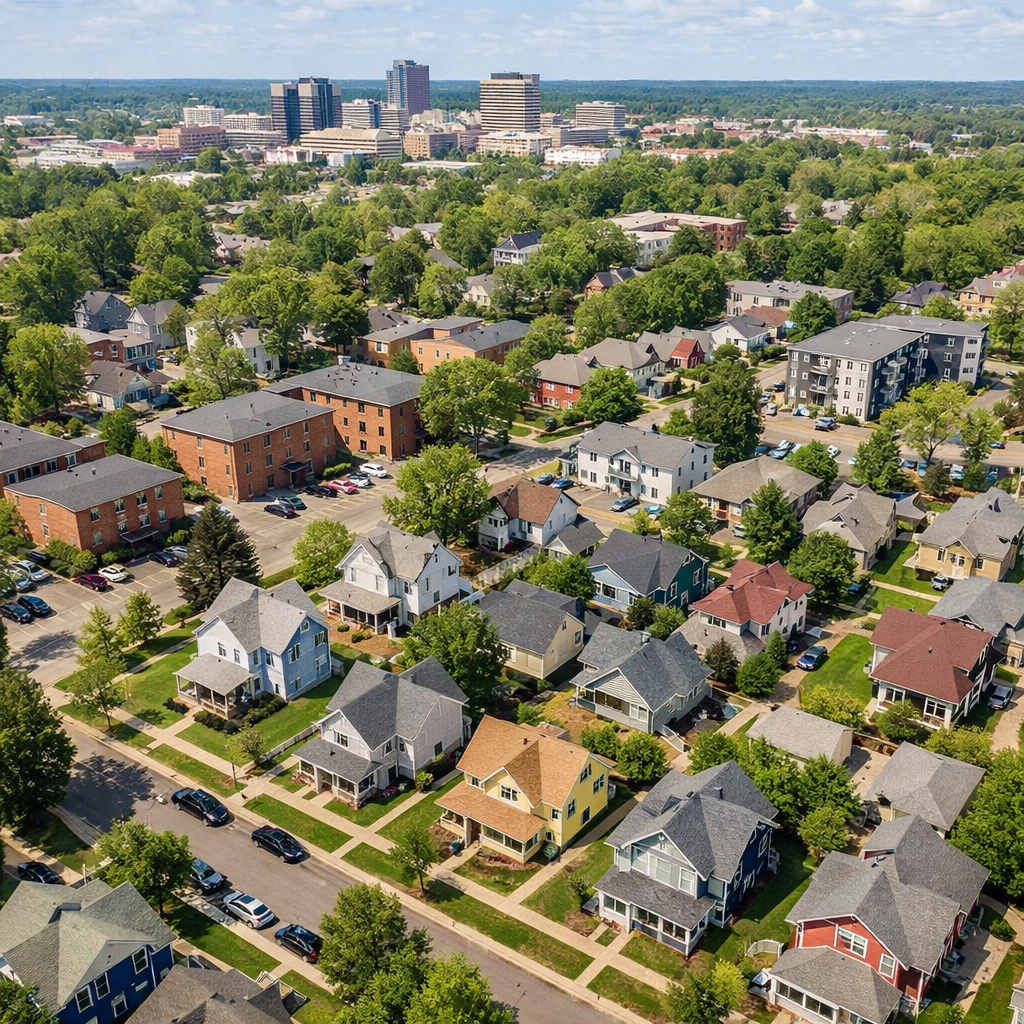
Kalamazoo’s housing stock remains dominated by single-family detached homes, which make up about 50% of occupied units. Multi-family housing is also significant: units in 2–4 unit buildings, mid-sized 5–19 unit buildings, and larger complexes of 20+ units are fairly evenly represented, especially in the urban core. Two- and three-bedroom configurations are most common for both homeowners and renters, while one-bedroom units play a bigger role among renters seeking affordability.
Recent years show modest growth in new construction: since 2022, only a couple dozen single-family homes have been built, compared with several hundred multi-family units. Local planning documents suggest that new development is likely to lean toward multi-unit affordable housing projects, particularly those that can access state or federal funding.
What This Means Depending on Your Role
- Home Buyers: If you’re entering the market, factoring in these trends is crucial. Low inventory and pricing pressure mean being flexible on location or home type may help. Also, mortgage rates and financing availability will play a big role in your overall cost.
- Renters: As rents rise, budgeting early and locking in renewals where possible can help. It might also be worth exploring neighborhoods outside city limits where rents may be more affordable without losing access to amenities.
- Developers & Local Officials: There’s strong signal for multi-family, affordable housing. Zoning, infrastructure, and financing incentives will continue to affect whether new units get built, especially in core neighborhoods.
Looking Ahead
While we may see price growth slow if mortgage rates rise or economic uncertainty increases, the fundamentals in Kalamazoo — renter demand, limited housing stock, and interest in multi-family development — suggest a continued upward pressure on both home prices and rents. For buyers, renters, and local stakeholders, this means staying informed and engaged as the market evolves.